
In preschool, mealtime is a time for more than just filling hungry stomachs – it is an opportunity for learning. Many parents question why an early childhood educator would encourage children to touch, explore, and manipulate their food using their hands. While this may seem a bit messy, this simple practice is supported by science, and it is an important piece of a child’s development
Sensory learning
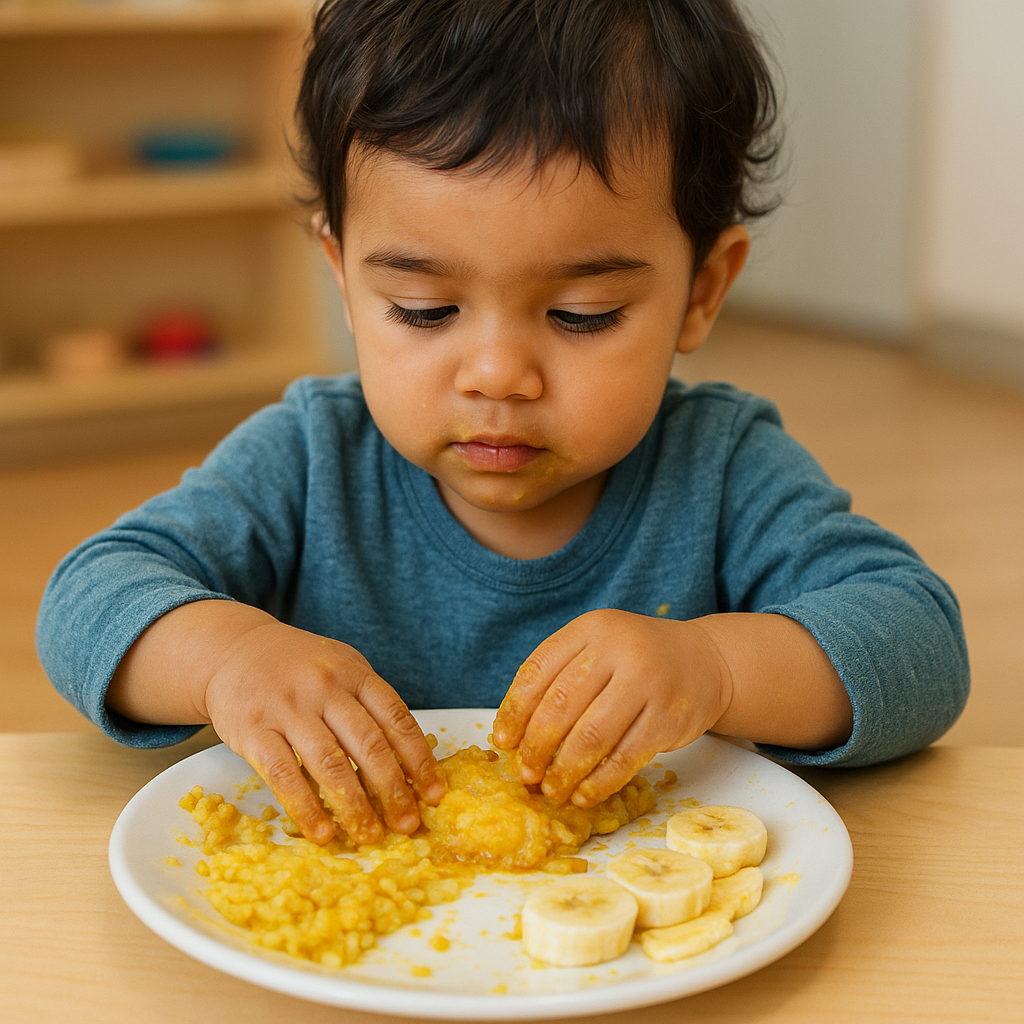
During the first few years of life, children are learning through their senses. Everything they see, hear, smell, taste, and touch helps form strong pathways in the brain. Multi-sensory interaction with food occurs every time a child is engaged in food with their hands. The child feels the texture of rice, sees the smoothness of a banana, or squishes a soft piece of bread. These hybrid sensory interactions strengthen neural connections and help the brain develop holistically. Studies also show that sensory exposure reduces anxiety against unfamiliar textures and helps children feel more confident as eaters over time.
Building Motor skills
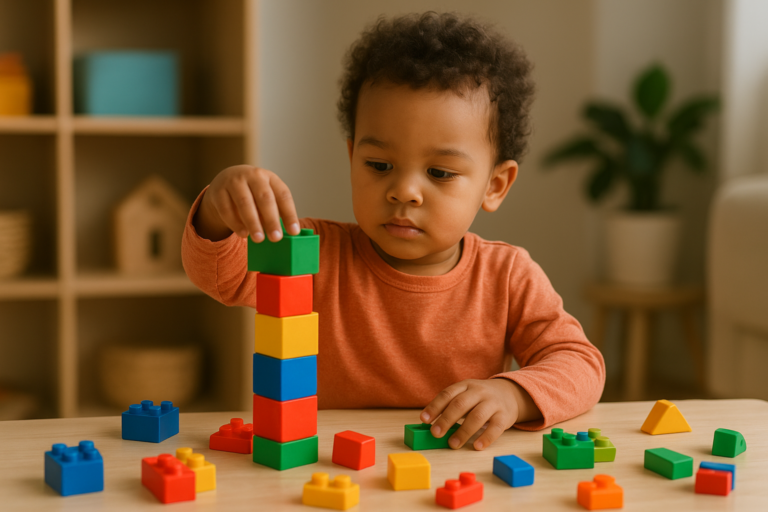
When they touch their food, babies are in fact working on their fine motor development as well. For example, when they pick up a small fruit, hold a chapati, or scoop dal with their fingers, they are exercising their finger muscles and coordination. These early motor skills contribute a great deal to children’s ability to do things in the next phase of development such as holding a pencil, tying their shoelaces, opening lunch boxes, and buttoning their clothes. In short, mealtime may be the best space to help them build hand strength and coordination.
REDUCING FOOD aversion
Another key benefit is the reduction of food aversion. Children (especially young children) will often go through phases of being picky eaters or hesitant eaters with new foods. Science tells us that touching the food is one of the first steps to accepting the food. When children have an opportunity to play with the food with zero pressure to eat it right away, they are much more relaxed. The child gets to experience how the food smells, how the food feels, and the temperature of the food. Eventually, their curiosity translates into their first taste. Many preschools have adopted a gentle approach to build a child’s positive relationship with food.
PROMOTES INDEPENCE
Exploring food at mealtime also promotes independence. Young children appreciate participating in an activity they can do on their own, and feeding themselves with their hands gives them a small amount of control. Children start learning appropriate portion sizes when they take small bites and can decide how much food they want to try. Children’s independent eating and self-help skills build confidence and help establish healthy eating habits from an early age. With time, children learn to manage their own plates, serve themselves safely, and tidy up after meals — this is an important step towards independence as a responsible person.
cognitive and emotional development
In addition, food allows children to touch and explore, and helps build cognitive and language development. When educators engage children in conversation about their food — “Is the carrot crunchy?” “Is the rice soft?” “What colour is your fruit today?” — children begin to learn new words and express their thoughts and observations.
Children begin to explore concepts of science in everyday use, comparing their sensory experiences of big and small, wet and dry, soft and hard, and cause and effect. Talking about food, and then further to explore with food, supports early thinking skills and helps children express themselves
There are also important emotional benefits. Squeezing soft chapati dough or running fingers through pudding can be soothing sensory experiences for a lot of young students. Children who receive tactile input are able to eat at their own pace and feel relaxed and focused. Social skills like sharing, waiting for turns, supporting friends, and being polite in a welcoming environment can all be developed through communal dining.
FINAL THOUGHTS
Although messy eating might seem like it needs fixing, in a preschool program it is a stage of healthy development. The goal is not to promote chaos, but rather to create a safe environment for exploring, learning and growing. With lots of practice and patience children will eventually progress to neater and more coordinated eating – but only after they have been provided opportunities to engage with food in a sensory way.