

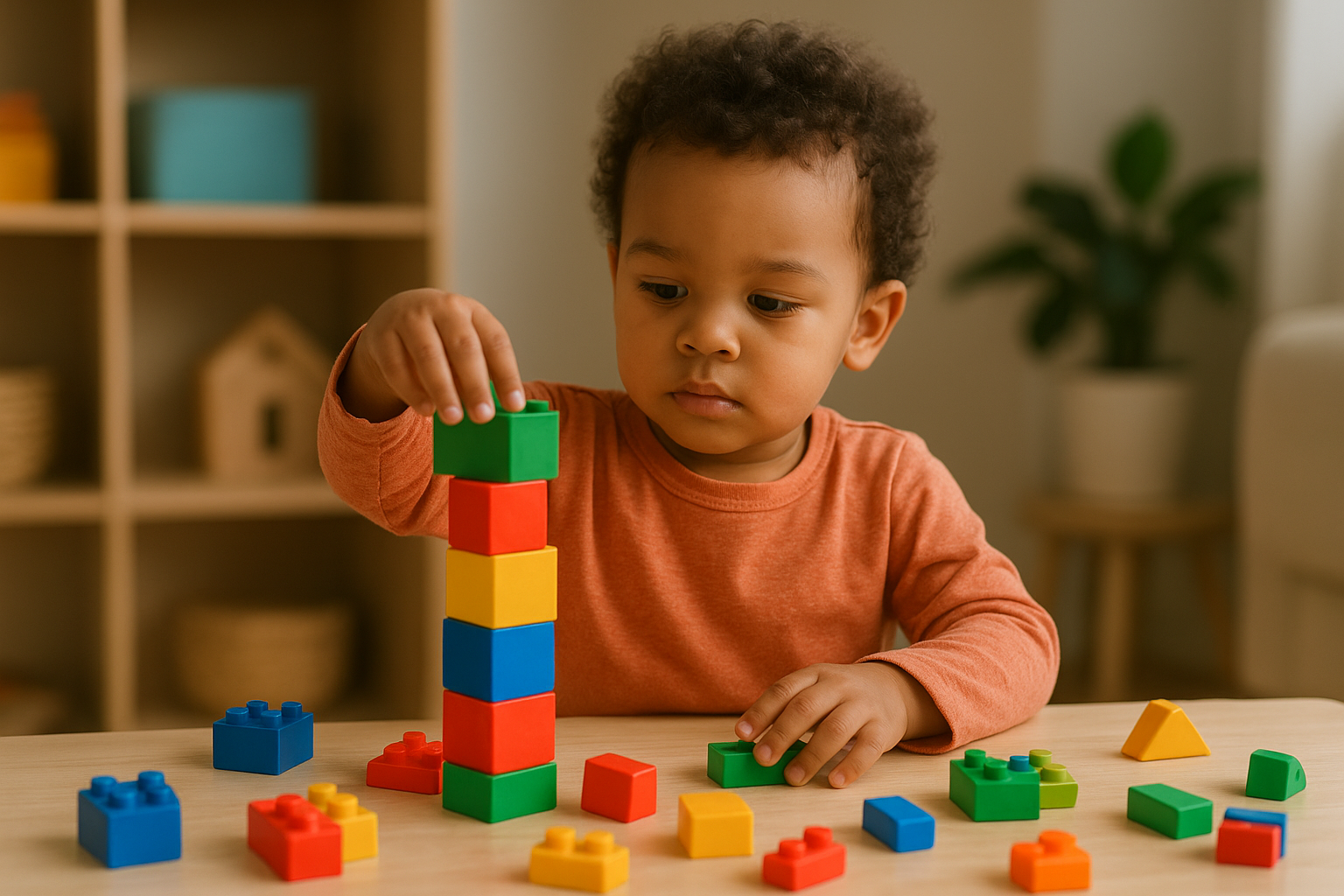
Children are not only having fun when they play; they are also learning, developing, and exploring in ways that will influence their future. Constructive play, in which kids use materials to build, create, and experiment, is one of the most effective ways to learn through play. Constructive play, such as building puzzles, molding clay, or stacking blocks, establishes the groundwork for important life skills.
What is constructive Play?
Constructive play is play that uses hands-on materials to create something new. For example, constructive play might include:
– Building towers with blocks or Lego
– Drawing or painting pictures
– Assembling simple models or puzzles
– Playing with sand, clay, or other sensory materials
Constructive play is important because children are problem-solving, decision-making, and being creative during this type of play—all things important for early development.
The Benefits of Constructive Play for Early Childhood Development
1. Promotes Cognitive Development
Through constructive play, children are stimulated to think critically. When children decide how to build a structure or work to fix a problem when blocks fall, they are using reasoning, logic, and spatial awareness. Children are later able to advance their understanding of sizes and shapes, balance, and cause-and-effect relationships.
2. Promotes Fine Motor Skills
Fine motor skills are enhanced as children manipulate smaller items, such as crayons or blocks. Fine motor skills are essential to perform both simple and complex tasks alike in their later stages of life.
3.Promotes Imagination and Creativity
Each crayon drawing and each figure they make by putting together simple plastic boxes helps to broaden their world of imagination and creativity. Children can freely express their thoughts, try out different materials, and realize their imaginative ideas through constructive play.
4. Encourages Emotional and Social Development
Children learn cooperation, idea sharing, and taking turns when building or creating together. Individual play encourages patience and self-confidence. Group play promotes communication and teamwork.
5. Fosters the Development of Problem-Solving Skills
Errors prompt a child to think constructively and implement more ways to achieve success in their plays and simple tasks. Children acquire important problem-solving abilities that they can utilize throughout their lives: the ability to adjust, adapt, and solve problems.
Promoting Healthy Play in the Home or at Preschool
Teachers and parents can promote healthy play by:
- supplying unrestricted resources such as building sets, cardboard, clay, or blocks
- establishing a creative play space where kids are free to explore
- Posing open-ended inquiries such as “What are you building?” or “How can we strengthen it?”
- valuing hard work and inventiveness over flawless outcomes
Conclusion
At Basic model school we recognize and encourage constructive play , as it helps to develop motor skills , creativity and social skills among little ones. We do recognize that constructive play is more than just a fun activity and plays a significant role in holistic development of little ones. At Basic model school we nurture your little ones creativity, curiosity and capacity to learn through constructive play.