
Mystery box game
We are going to put the curiosity and imagination of our little ones to test through this game.
We need an opaque box with an opening for this game. The adult can place things like a fruit, a book, pen, toys etc. inside the box , then let the kids touch and feel the objects by inserting their hand through the opening in the box and let them identify the object they are feeling through its texture, size, shape etc.
This game help to build sensory awareness and promote logical thinking in kids.
Build-the-Bridge Challenge
Nothing ignites creativity quite like giving a child a set of materials and an open-ended challenge. Children are provide things like craft sticks, paper cups, blocks, and clay, and the challenge is simply to build a bridge for a small toy car. There are no instructions—only a challenge.
Why it is good for thinking skills:
- Strengthens engineering thinking
- Encourages trial and error
- Increases spatial awareness
- Fosters group skills when in small groups
- Explains cause and effect (“If I make the base wider, it gets stronger.”)
Children take pride in constructing something real, and we love to watch them take pride as their confidence builds from the very first iteration.
Story Sequencing Cards
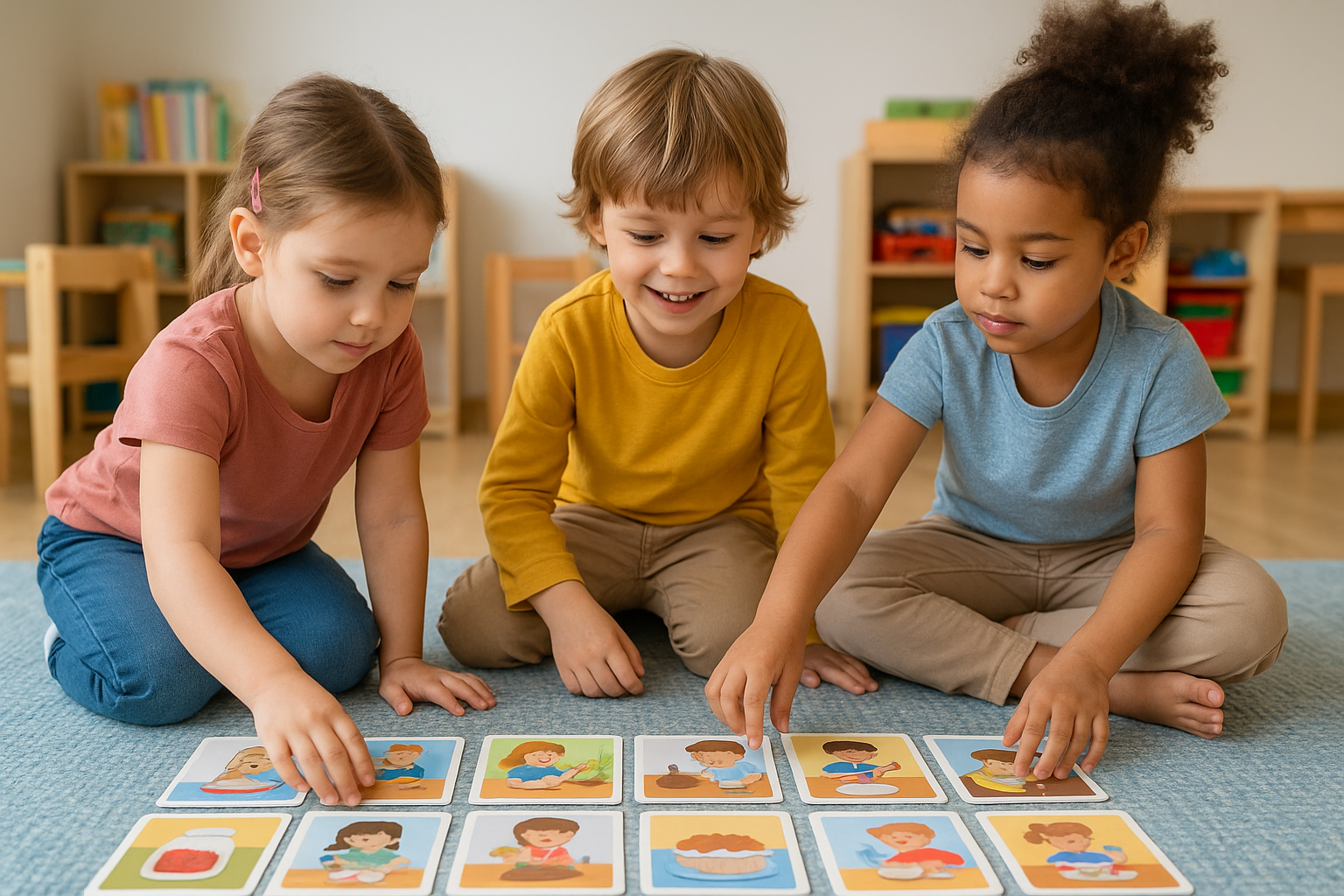
Grasping the concept of order, what comes first, next, and last, is an important cognitive skill for preschool age children.
How we do it:
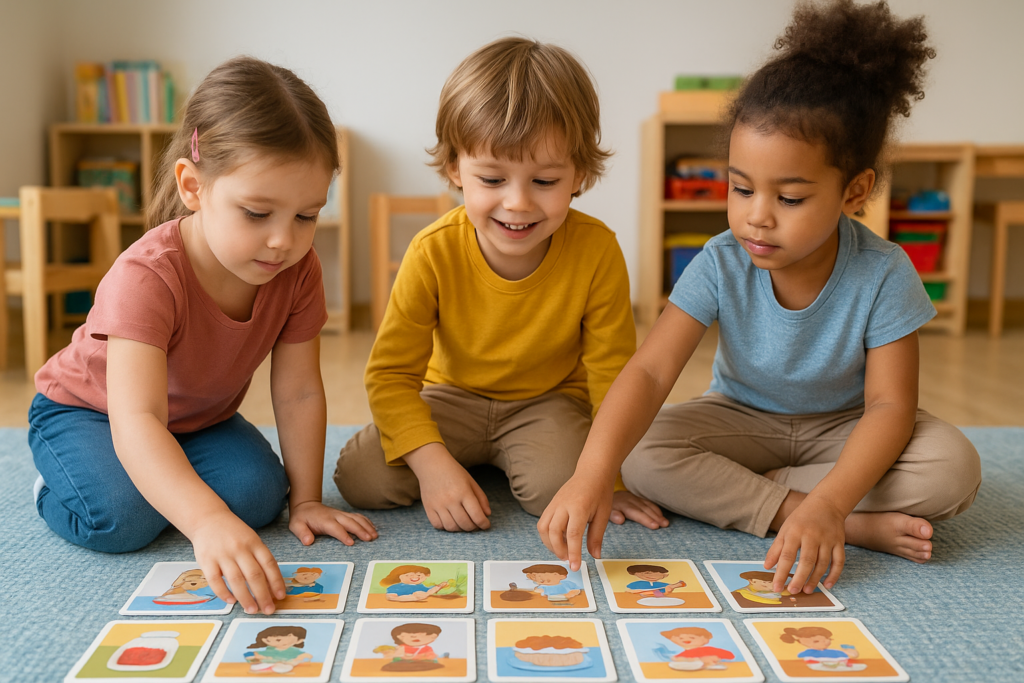
We use picture cards with simple events that happen in daily life (like brushing teeth, planting a seed, baking a cake or going to school). The children will put the cards in order and narrate the story in their own words.
Why it is great for thinking skills:
- Develops logical order and memory
- Develops early literacy skills
- Enhances attention to detail
- Develops verbal expression
- Helps children to understand cause and result
Story sequencing also develops early reading comprehension and storytelling skills which are useful later in the academic years.
Treasure Hunt with Clues
One of the most effective ways to strengthen thinking skills in preschoolers is through a treasure hunt that requires them to keep active and engaged.
How we play:
Teachers will hide small items in and outside the classroom. Students will receive picture cues or simple verbal clues (“Look under something where we keep books!”). The student will use one clue to find the next clue until the treasure is found.
Why we love it for thinking skills:
- Develops critical thinking and decision-making skills
- Increases listening skills
- Allows for teamwork and cooperation
- Enhances memory and learning to follow directions
- Provides independent problem-solving skills
This game is active, adventurous, and fun, just like thinking should be for young children
What Can You Make? (Open-Ended Art Game)
Open-ended activities stimulate imagination better than structured tasks.
How we play:
The children are presented with assorted materials—paper plates, yarn, crayons, cardboard tubes, buttons, leaves, colored paper, cotton, and safe glue. They are then prompted to create “whatever they want.” We sometimes include prompts like “Make something that flies!” or “Make something round.”
Why it is great for thinking skills:
- Helps children practice their planning and executing
- Improves fine motor skills
- Teaches self-expression
- Starts decision making (“Should I use this color or this shape?”)
There is no right or wrong outcome, as children think critically, explore with freedom, and see that mistakes can lead to new thinking.
The Broad Outlook: Why Thinking Skills are Important at this Age
Ages 3 to 5 is a time when little ones start establishing the foundation of cognitive development. They begin to:
- Recognize patterns
- Ask meaningful questions
- Solve basic problems
- Make choices
- Create make-believe situations
- Understand the rules and consequences
The activities we do in preschool often seem to be simply fun, natural play experiences. But these experiences are actually building blocks to help children become learners who are full of confidence. Children are naturally curious and enjoy challenges. When they are engaged in their own investigation through play, this builds their stamina for focus, attention, and independence that will follow them through their schooling and into adulthood
At our preschool, we emphasize these thinking games throughout the day so that every child can have meaningful and joyous learning experiences while playing.